Limits
Wednesday, 14 March 2018
3:07 PM
Definitions
approaches L as x approaches infinity, the
function has limit .

We define the distance of from the limit as the "".
This can be expressed as 
When , 
When , 
When , 
; when 
Formal Definition

We can say that , if, for every there exists a real number such that if then, 

Proof
> Prove that 
- Get the limit L
- Sub f(x) and L into the absolute value
- Factorise L out (multiple by one (denominator/denominator))
- Replace x with M
- Rearrange M
sub g(x) and L into the absolute value, factorise a 3 out, replace x with M and rearrange to find M in terms of epsilon.
From <https://moodle.telt.unsw.edu.au/mod/hsuforum/discuss.php?d=28773#/mod/hsuforum/discuss.php?d=28773#>
If , then 
Consider 

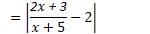

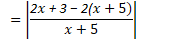

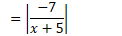

- Find lim ()

- Sub into

- Set

- Let

- Solve for
